Climate Labyrinth

Climate Labyrinth

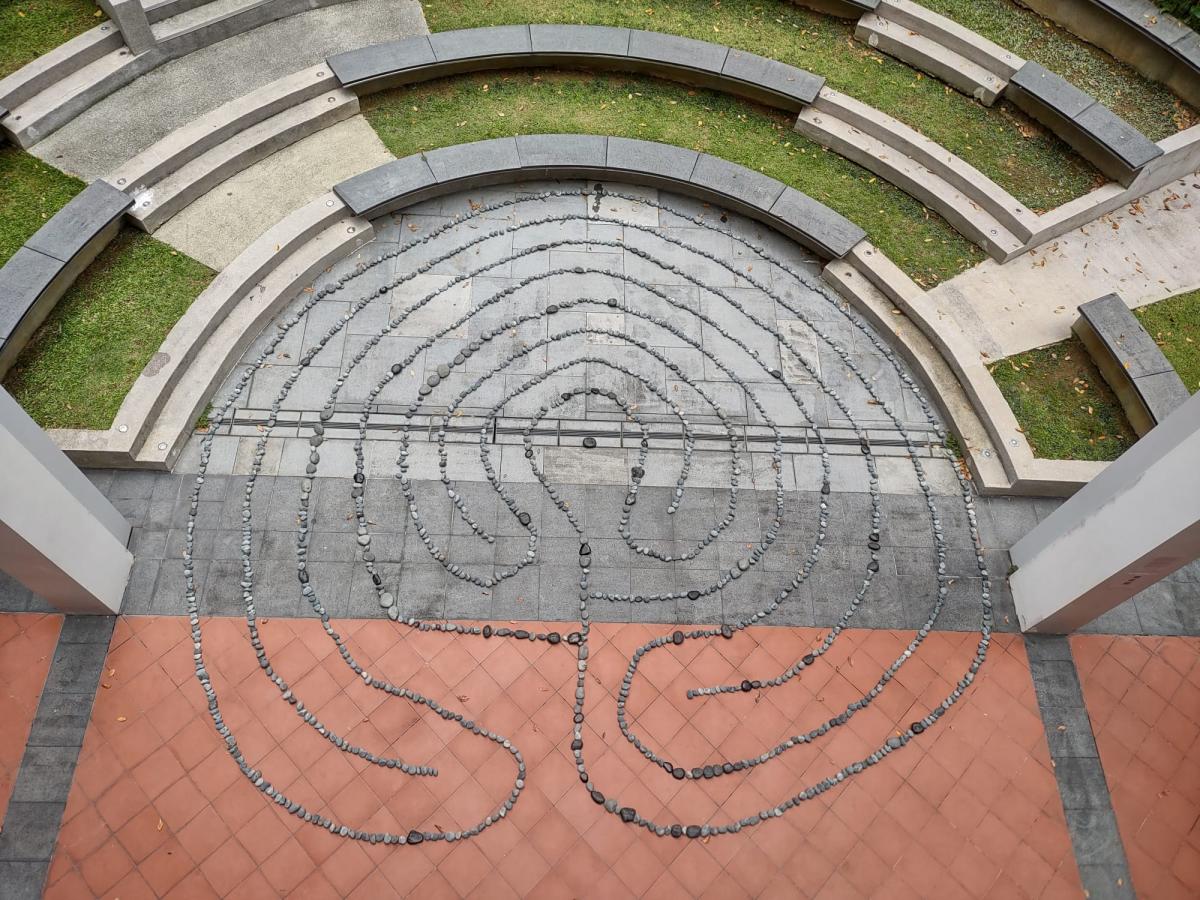
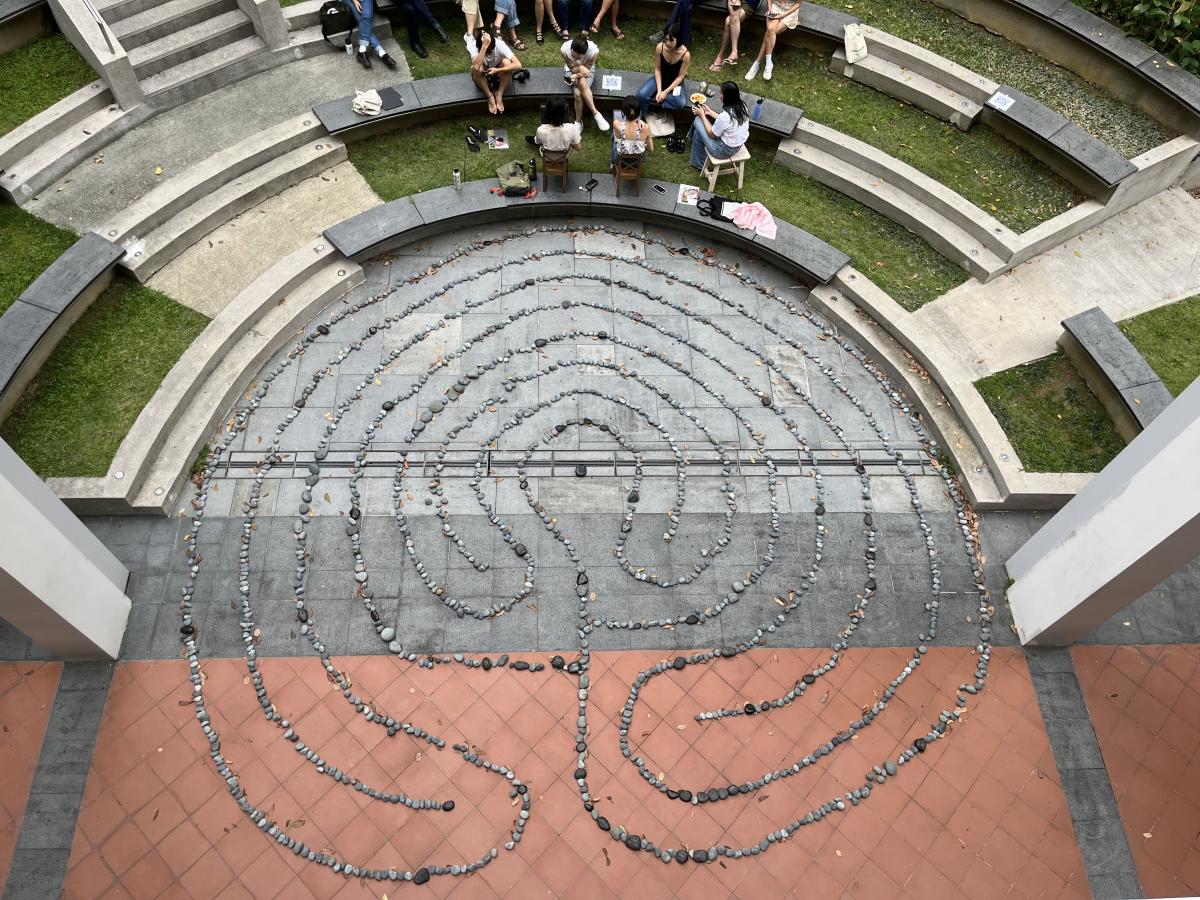
Stones, black ink, ca 600x600cm

Amphitheatre of Yale-NUS Campus, Singapore, 2023

A collaboration of Christoph Draeger and Todd LeVasseur with Yale-NUS students of the courses: Art&Climate (CD), Climate Hope and Resilience (TLV), 

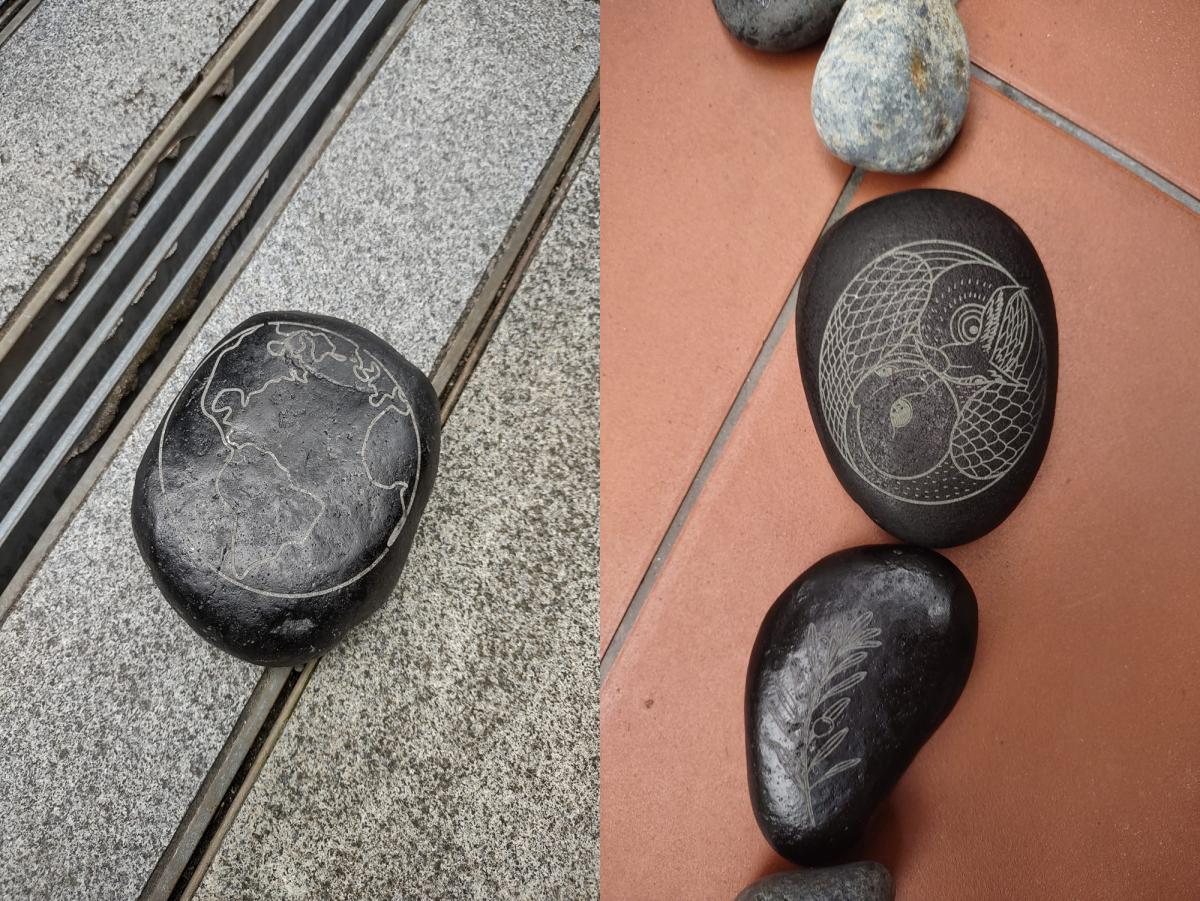
For the Climate Labyrinth, our Yale-NUS students in Singapore were asked to contribute stones that they designed with their own patterns and messages. For that, we invented a new process that allows to print directly on stone with the digital laser cutter machine at the Fablab. Then we placed the altered stones within the labyrinth while building it collectively. Then, visitors would walk slowly through the alleys, kneeling down or picking up a stone to read its message. 

Anthropogenic global warming is the “threat multiplier” of our times and of the future of Yale NUS students, as well as all of humanity.  Global warming impacts already range from increased droughts, rain bomb events, changing weather patterns, acidifying ocean, and an increase in climate refugees, with many of these already impacting communities around the globe.  

Understanding the political, economic, environmental, and social causes of global warming is central to education; where generating humanistic responses that speak to climate despair and hope, and to cultural shifts based on insights from psychology, the arts, the humanities, and political ecology is equally central.  Understanding the above factors and responses to climate change are also central to citizenship in Singapore, given its geopolitical status and geographic location, as well as Singapore’s own plans to mitigate and adapt to future climate trajectories.  
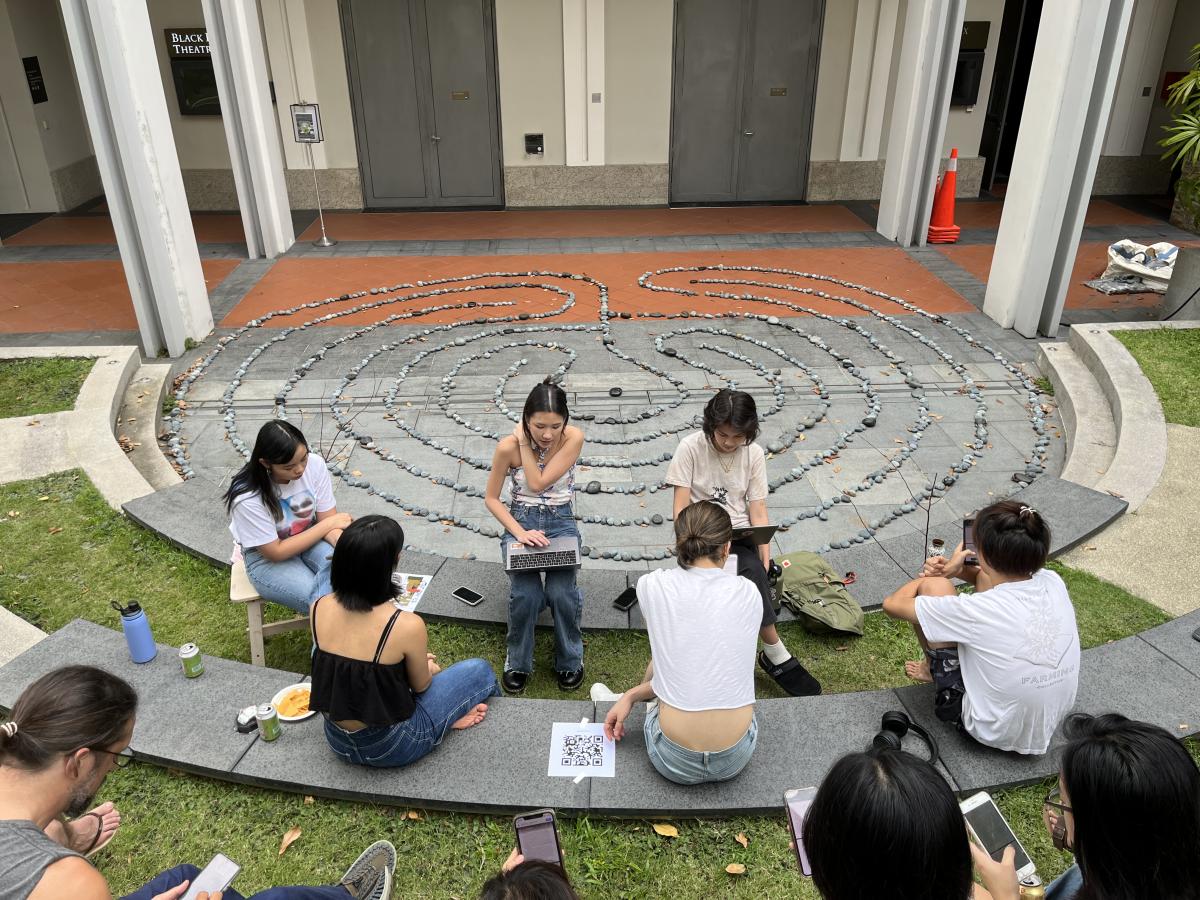
Stones, black ink, ca 600x600cm

Amphitheatre of Yale-NUS Campus, Singapore, 2023

A collaboration of Christoph Draeger and Todd LeVasseur with Yale-NUS students of the courses: Art&Climate (CD), Climate Hope and Resilience (TLV), 

For the Climate Labyrinth, our Yale-NUS students in Singapore were asked to contribute stones that they designed with their own patterns and messages. For that, we invented a new process that allows to print directly on stone with the digital laser cutter machine at the Fablab. Then we placed the altered stones within the labyrinth while building it collectively. Then, visitors would walk slowly through the alleys, kneeling down or picking up a stone to read its message. 

Anthropogenic global warming is the “threat multiplier” of our times and of the future of Yale NUS students, as well as all of humanity.  Global warming impacts already range from increased droughts, rain bomb events, changing weather patterns, acidifying ocean, and an increase in climate refugees, with many of these already impacting communities around the globe.  

Understanding the political, economic, environmental, and social causes of global warming is central to education; where generating humanistic responses that speak to climate despair and hope, and to cultural shifts based on insights from psychology, the arts, the humanities, and political ecology is equally central.  Understanding the above factors and responses to climate change are also central to citizenship in Singapore, given its geopolitical status and geographic location, as well as Singapore’s own plans to mitigate and adapt to future climate trajectories.  
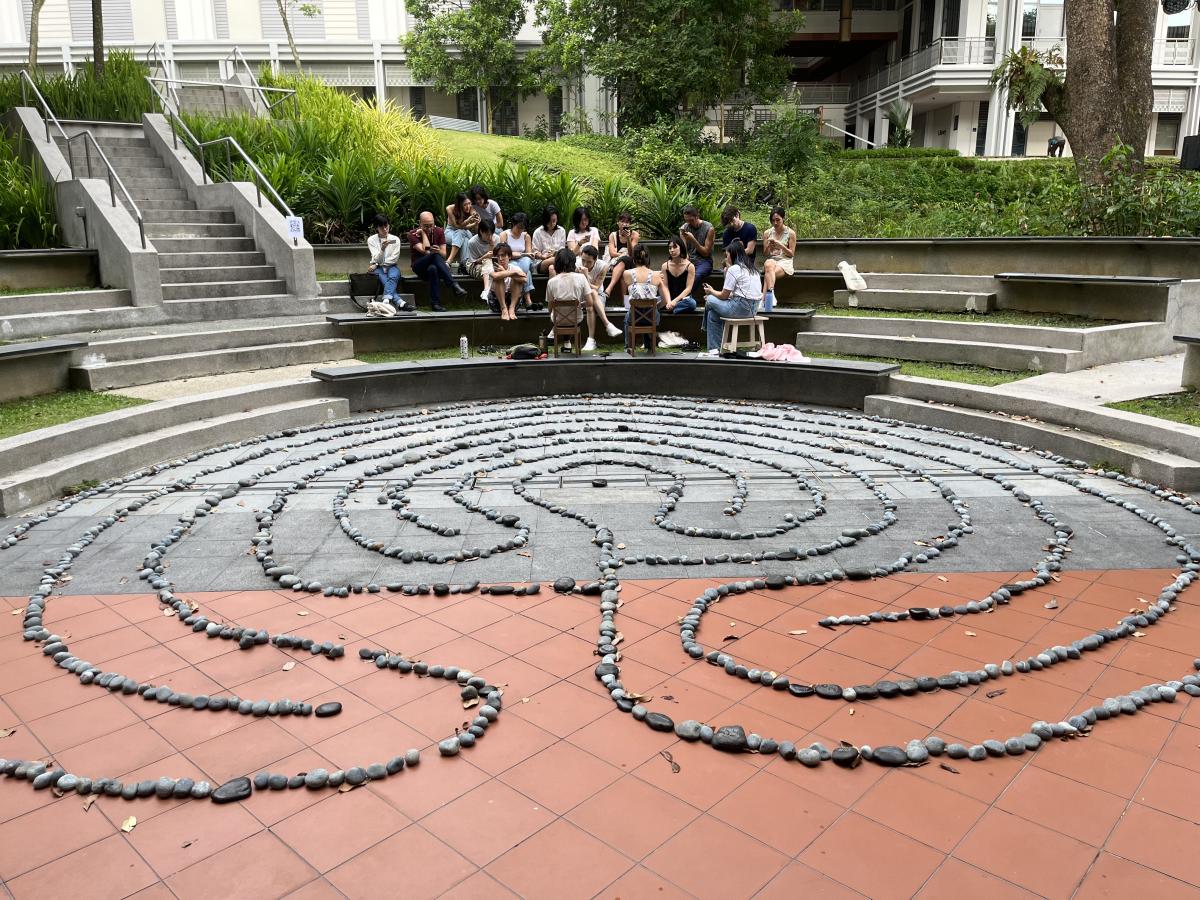
Stones, black ink, ca 600x600cm

Amphitheatre of Yale-NUS Campus, Singapore, 2023

A collaboration of Christoph Draeger and Todd LeVasseur with Yale-NUS students of the courses: Art&Climate (CD), Climate Hope and Resilience (TLV), 

For the Climate Labyrinth, our Yale-NUS students in Singapore were asked to contribute stones that they designed with their own patterns and messages. For that, we invented a new process that allows to print directly on stone with the digital laser cutter machine at the Fablab. Then we placed the altered stones within the labyrinth while building it collectively. Then, visitors would walk slowly through the alleys, kneeling down or picking up a stone to read its message. 

Anthropogenic global warming is the “threat multiplier” of our times and of the future of Yale NUS students, as well as all of humanity.  Global warming impacts already range from increased droughts, rain bomb events, changing weather patterns, acidifying ocean, and an increase in climate refugees, with many of these already impacting communities around the globe.  

Understanding the political, economic, environmental, and social causes of global warming is central to education; where generating humanistic responses that speak to climate despair and hope, and to cultural shifts based on insights from psychology, the arts, the humanities, and political ecology is equally central.  Understanding the above factors and responses to climate change are also central to citizenship in Singapore, given its geopolitical status and geographic location, as well as Singapore’s own plans to mitigate and adapt to future climate trajectories.  
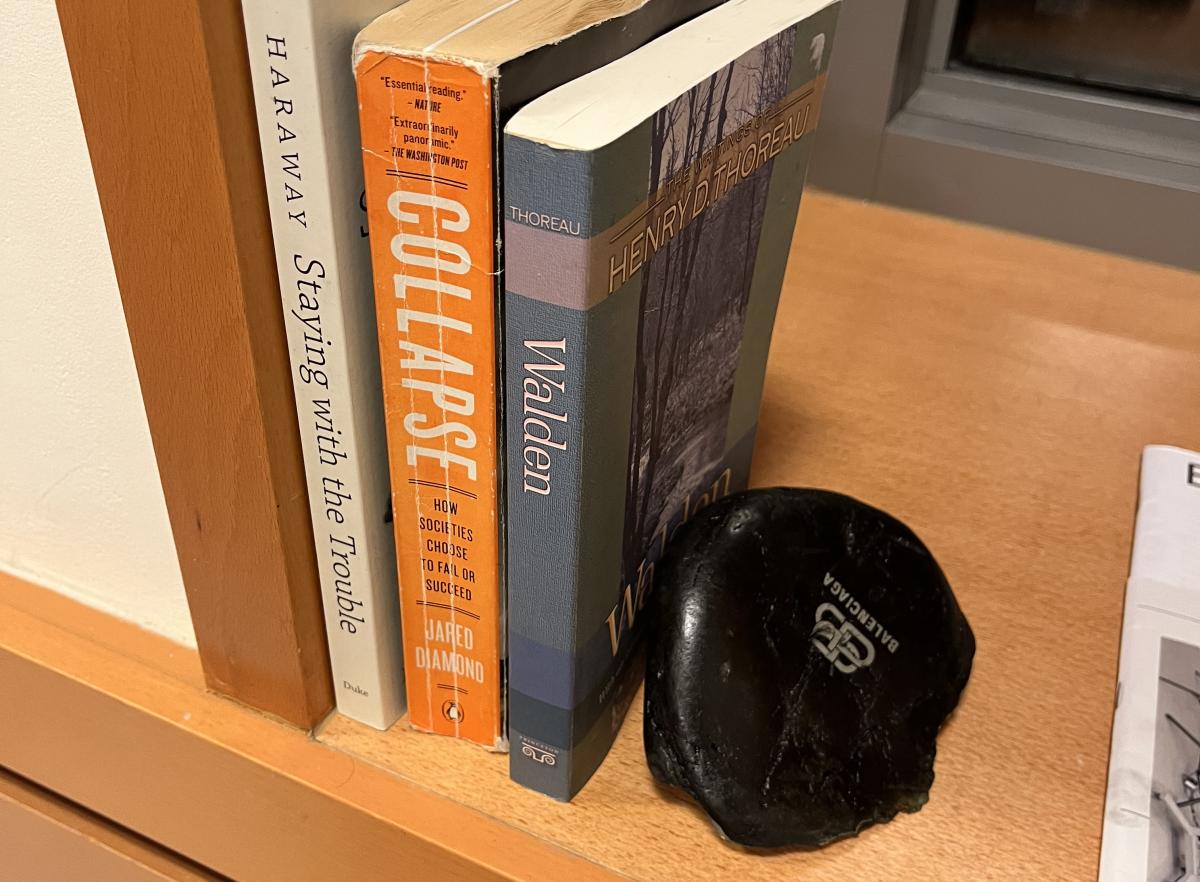
 

Balenciaga, 2023

(Stone, black ink, laser cut, ca 10x10cm)

One of the test stones, appropriated as book support

Three stones designed by students

Black ink, laser cut, dimensions variable, 2023

Invitation to the opening / collection of slogans for the stones


Stones, black ink, ca 600x600cm

Amphitheatre of Yale-NUS Campus, Singapore, 2023

Stones, black ink, ca 600x600cm

Amphitheatre of Yale-NUS Campus, Singapore, 2023